
Person using twitter on their phone after being bought by Elon Musk

If you’re like us, you’re trying to stay updated on what the heck is going on with Twitter. The nearly 20-year-old app has experienced some changes recently, and we’re here to explain what’s going on. 

Elon Musk Bought Twitter

Earlier this year, electric vehicle tycoon Elon Musk expressed interest in Twitter because he sought to continue the company’s commitment to free speech. In April, Musk bought over 9% of Twitter, making him the largest shareholder. 

After negotiations, Musk and Twitter finally agreed to a deal. According to the New York Times, “Twitter agreed to be taken over at $54.20 a share, a 38 percent premium over the share price before it was revealed that Mr. Musk had been buying up the company’s stock.”

In simple terms, he bought Twitter for about $44 billion. This is the largest deal in history to take a company private. 

Critics, however, question the deal since the platform has around 217 million daily users compared to the billions of users logging into Instagram and Facebook daily. Additionally, the little blue bird app hasn’t turned a profit in nearly a decade. 

Tesla’s CEO counters financial criticism because he is placing a higher value on opening the platform to free speech. In a release announcing the agreement between Twitter and Elon Musk, the new owner explains “free speech is the bedrock of a functioning democracy, and Twitter is the digital town square where matters vital to the future of humanity are debated,” said Musk. 

The billionaire tech mogul added, “I also want to make Twitter better than ever by enhancing the product with new features, making the algorithms open source to increase trust, defeating the spam bots, and authenticating all humans. Twitter has tremendous potential – I look forward to working with the company and the community of users to unlock it.”

C-suite level Executives Quit Twitter 

A company reshuffle is to be expected during any merger or acquisition. Twitter is no exception. This company, however, is experiencing a larger than usual reshuffle as three C-suite-level executives and two vice presidents depart from the company. 

Amid this new chapter for the company, their CEO, Parag Agrawal, has assured the staff at Twitter that they are not planning company-wide layoffs. 

Only time will tell how Twitter will fare after the dust settles. 

How is Twitter Reacting to the New Owner?

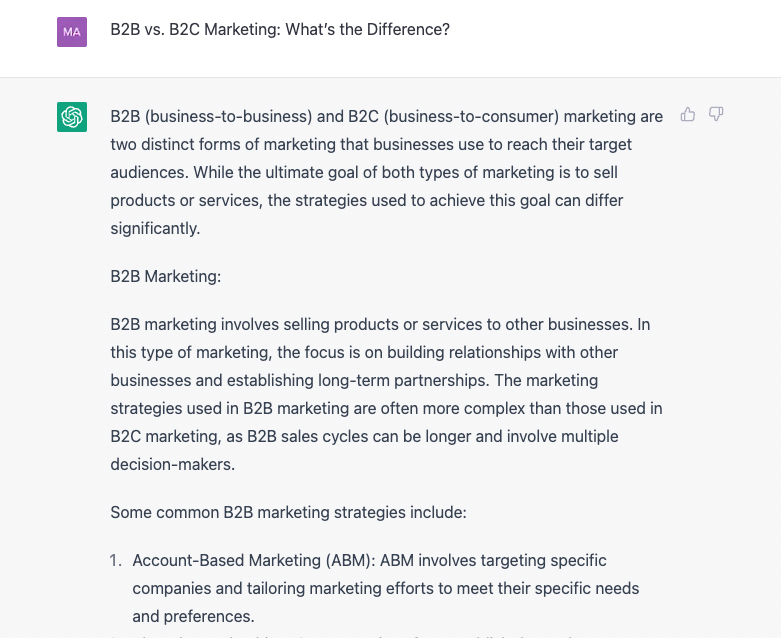
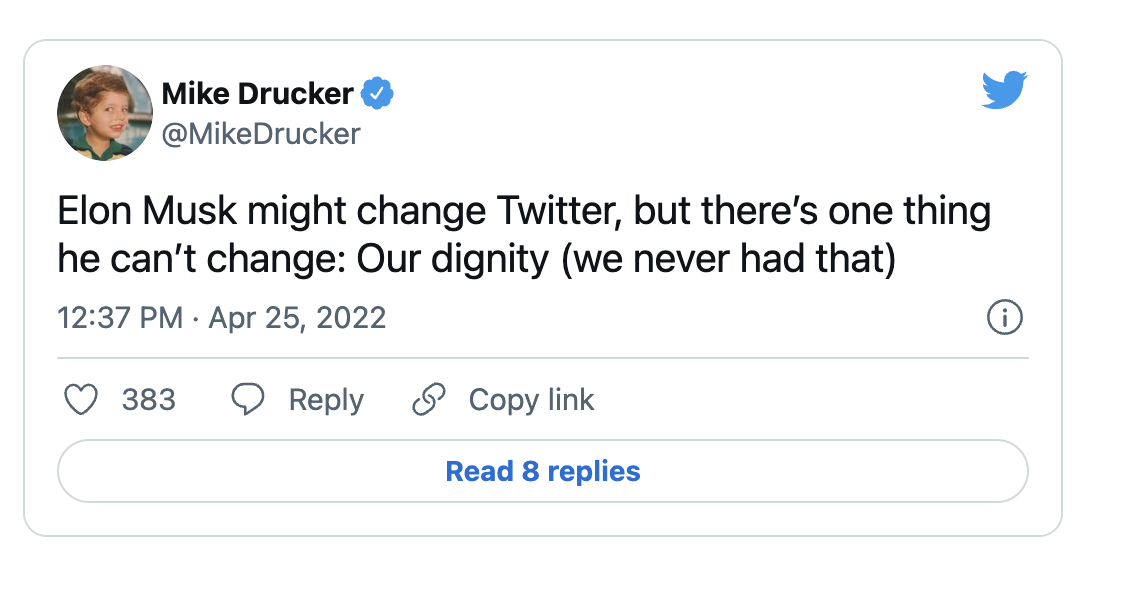
Of course, Twitter users have plenty to say about how they feel about Elon Musk purchasing the app. There are mixed feelings about it, but we thought we’d share a few of our favorite reactions below. 

The Twitter saga is long from over, and we’re excited to keep you up to date on any new news that surfaces. Save this link to stay updated on what’s going on with Twitter. Speaking of social media apps, read our next article explaining what’s going on with the Instagram Algorithm!

scrolling on instagram burgers in background

Social media algorithms, we’ve written about them before. It seems, however, that with every month, week, and sometimes daily, Instagram is implementing new changes.

Instagram has recently implemented a number of changes to its algorithm that have crashed engagement across nearly all accounts.

The most common complaints we hear? “I never see my friends’ posts anymore,” “I think I’m shadowbanned…” “My engagement sucks lately.”

We’ve heard it all and we feel your pain! Let’s talk about some of the recent changes Instagram has implemented and address some of these concerns.

What’s Going on with The Instagram Algorithm?

What better way to dissect the algorithm than to look at a blog post that Adam Mosseri, head of Instagram, wrote titled “Shedding More Light on How Instagram Works”?

Most importantly, Mosseri wrote that one of the main misconceptions about Instagram is the existence of “The Algorithm.”

“Instagram doesn’t have one algorithm that oversees what people do and don’t see on the app,” says Mosseri. “We use a variety of algorithms, classifiers, and processes, each with its own purpose.”

There’s a ton more good stuff and information on how the Instagram algorithm works (or lack of!) in the actual article, so check that out if you’re interested.

For now, let’s talk about some of the recent changes Instagram has implemented that might affect your content being seen or not.

Chronological order is back!

It’s about time! Instagram’s @Creators account finally announced the return of chronological order.

Back in the day—in 2010, to be exact—the Valencia filter ran rampant and the app itself looked like a neutral-toned vintage camera. Moreover, your home page was a single stream of photos that were sorted in chronological order.

Viewing posts in chronological order, however, was a feature that was removed in 2016. If you ask some, this choice nearly started WW3 (Just kidding … Kindof).

But flash forward to today, it’s back!

“You’ve been asking, and we’ve been listening! 👀” is what @creators captioned the announcement.

Following and Favorites

Instagram decided to take things a step further.

Instead of reverting back to solely chronological order, Instagram now offers three options to view your feed:

  • Home
  • Favorites
  • Following

Here is a brief description of what makes each different.

Home: According to @creators, “home” refers to the feed you’ve gotten used to. This feed will “remain a mix of content from people you follow, recommended content you may like, and more.” Home will remain your default view when you first open the app.

Favorites: Your “favorites” feed will show you the latest posts “from a list of up to 50 specific accounts that you choose.” This might include your best friends, favorite creators (including Digital Storyteller of course), or other favorite accounts that you follow.

Following: Just as it sounds—the “following” feed will show you posts from only accounts that you follow.

Are You Using All of Instagram’s Features?

Over the past five years, Instagram has launched a ton of new features, including reels, stories, IGTV, and even shopping.

We’ve noticed that sometimes it feels like Instagram either rewards or punishes accounts based on your usage of the app as a whole. The bottom line? Instagram wants you to use and try all of its features. 

Depending on your business or goals, your digital marketing strategy might include a combination of:

  • Standard posts
  • Reels
  • Stories
  • IGTV videos
  • Shoppable posts

Consistency is Key

The algorithm favors consistency and patterns. Find out when your target audience is most active, and tailor your posting schedule toward that. At Digital Storyteller, we do this with ease using the scheduling platform, Metricool. Of course, there are various alternative scheduling platforms and tools that can be used similarly as well.

A Quick Rundown of Each Social Media Platform

Lastly, it’s important to know which social media channels are best suited to help you attain the unique needs and goals of your business. That’s why we’re sharing a brief rundown of what each platform can be used for when it comes to your business. So, what the heck does each of them do? Speed round, go!

Instagram

Instagram is great for building engagement and sharing culture. That means taking pictures of your team at events, showing off your pets, and happy hours and posting them!

When an Instagram user visits a business’ Instagram, they want to see the people behind the business. Show them who they get to work with when they decide to buy your product or become a client.

Facebook

Facebook is for your grandma… Just kidding, kind of!

Facebook, in the business world, is a largely pay-to-play platform. In simple terms, if you’re not putting money behind your Facebook efforts, chances are not many people will see your content. Boosting a specific post to your Facebook audience can attract thousands of impressions, whereas organic content doesn’t typically reach the same levels of performance.

(Please note: We’re not suggesting that you dedicate your entire marketing budget to your Facebook page, but putting $50 behind a post here or there can significantly support your Facebook performance).

LinkedIn

LinkedIn is a professional platform, which means it’s probably not the best-suited platform to share your family photos or pictures from your latest island vacation.

LinkedIn is a great platform to help you build authority and build a professional network. Chances are, LinkedIn is your best bet if you’re looking to identify qualified leads via social media. It’s also a great way to gather expertise from established experts in your industry.

Twitter

In a nutshell, Twitter is for politics, news, and funny one-offs (think: memes, GIFs, recaps of the Oscars…)

A Final Word

We know that managing your business’s social media presence can be a lot to keep track of on top of running your business. That’s why we recommend you pass on the work of crafting a killer digital marketing plan to our team of experts at Digital Storyteller.

Not ready to make the jump yet? Let’s get REEL instead! Check out this article on how Instagram reels support your social media strategy. Then, shoot us a message.

How to attract the right client

So, you’re a business owner looking to get more clients? (Trust us, you’re not the only one!)

Every business owner ever:

But hold on – before you go all Heidi Klum on us and start looking to get MORE clients… Have you taken a minute to consider how to attract the right clients? Yes, the right clients. After all, you don’t want to be marketing your products and/or services to every person you walk by…

Not sure where to start? Lucky for you, we’ve got Andrew Marr, CEO and Owner of Digital Storyteller on camera to chat about how to attract the right clients.

Let’s see what he has to say.

Who is Your Ideal Client?

Clients, for any business owner, are obviously extremely important. Without clients, you’d have no business! (But you already knew that).

This considered, building a successful business and getting more clients is most likely one of your primary goals as a business owner.

Before we jump the gun and talk about getting more clients, however, it’s important to first discuss who the right clients are for you. How can you attract the right clients to your business?

Identifying the Perfect Client

The question isn’t, “Do you want more clients?” Of course, you do! The number one thing is, have you identified your perfect client?

Then, after you’ve identified your ideal client, think: Are you willing to create strategies around that particular client?

Our Perfect Client at Digital Storyteller

At Digital Storyteller, we focus on marketing for financial services companies. The realm of financial services ranges from commercial insurance to wealth advisories, commercial real estate firms, the list goes on.

While we love whisky, chardonnay, puppies, and tacos, we don’t market for companies that have anything to do with these elements. Why not? Because we’ve identified our perfect client (financial services clients) and unfortunately, whisky, chardonnay, puppies, and tacos have nothing to do with this industry (a little sad, right?)

We know it’s difficult not to accept whatever business walks through the door. It’s important, however, to hone in on who your ideal client is and not accept anyone else apart from this target audience.

So, to attract more clients, you have to first, figure out who your perfect client is. Put your energy and resources into that.

Interested in meeting one of our ideal clients? Check out this spotlight we did on our client Frank Crivello, founder and CEO of SBMA Benefits.

Why is Organic Marketing Great for Financial Services Companies?

When you think of ‘marketing,’ what do you think of?

Chances are the first place your head goes is to advertising—billboards, television commercials, magazines, Instagram ads, the list goes on.

We don’t blame you! We are bombarded by ads every day. In fact, did you know research shows every day the average person encounters between 6,000 to 10,000 ads? This is a massive jump, considering that back in the 70s, “it was reported that the average person saw between 500 to 1600 ads per day.”

But remember, advertising is just a small piece of the marketing pie. Although paid ads have their time and place there’s a better way to market yourself. (Psst… It’s called organic marketing).

Amanda Rogers, Founder and Chief Creative Officer at Digital Storyteller, talks about why organic marketing is great for financial services companies (and all companies for that matter!)

Let’s get into it.

The Mistake Many Business Owners Make

If you’re in the business-to-business (B2B) space and are trying to get more clients under your belt (as one does!), your thought process about doing so might go something like this:

  • “I’m going to put out some ads and tell people what I do.
  • Then, they’ll come to my website.
  • Then they’ll give me a call.
  • And BOOM! I’ll get clients.”

Sigh… if only it were that simple! In today’s world, paid advertising alone is not enough to attract the right clients. So, what else do you need in addition to occasional paid advertisements? Enter, organic marketing.

Paid vs. Organic Marketing: What’s the Difference?

Let’s make this simple.

Ads are about building awareness; organic content is about building trust. While different, BOTH are important to building a successful digital marketing strategy for your business.

As Amanda shares, there are often situations in which the two overlap even. “There are elements of organic content that also build awareness.” For example, integrating boosted posts into your organic social media strategy.

What Does Organic Marketing Actually Do?

Most importantly, you need to know the primary benefit of organic marketing: building trust. Organic marketing might include email marketing, a thought-out video strategy, blog content, etc.

The greatest benefit of all of these things, however, is that organic marketing increases the feeling that people have of knowing and trusting your brand.

Don’t get us wrong, there are certainly strong benefits of paid ads (which you can read more about here) but it shouldn’t be the only marketing effort your business is focused on.

However, as Amanda puts it, “If and when you do decide to do ads, [if] you’ve been doing a strong organic digital marketing push,” the benefit will be much greater.

  • Your domain authority will be higher
  • Your ads will show up in the top three search results
  • And most importantly, your ads will be supported by showing up on that first page of Google with an organic result

“This reinforces in the viewer’s mind, not only do I see their ad, but I also see that they are legitimately what I’m looking for,” says Amanda.

And the best part of all? If you’re paying less for ads, you have more money left over that you can spend on wine! What better motivation is that?

So, are you ready to save money on ads so you can spend it on wine? Us too. At Digital Storyteller, we specialize in organic marketing for financial services companies. If you’re looking for a digital marketing agency that will grow your business better than just pushing paid ads, contact our team today.
Website Redesign

If you’re reading this, chances are you’re considering revamping your business’s website. To paint a picture, you might be asking yourself if your current website still fits your needs. Or, if you’re like many others, you might be cringing, asking yourself, ‘Why did I ever think that looked good?!” (We’ve all been there…)

Truth be told, there are many reasons why you might be considering a redesign. (Note: a ‘rebrand’ is something completely different altogether. Don’t worry you can learn everything you need to know about rebranding your business on our blog).

Anyway, whether your site isn’t performing well or it simply doesn’t mesh with your business’s look and feel anymore, we’re here to help answer the question: How often should you redesign your website?

Let’s dive in.

The Hard and Fast Answer

For those of you who don’t want to sift through the reasons why your business might consider a website redesign, here’s a general rule of thumb for how often you should refresh your website.

A business should consider a redesign every three years, according to Amanda Rogers, Founder and Chief Creative Officer of Digital Storyteller. You may find that your business needs a redesign sooner, but likely not much longer after the three-year mark.

“Every three years you should look at your website and really evaluate how much your business has changed.” 

If you look at the last three years alone in the business world, so much has changed with:

  • COVID
  • The changing world of work
  • The way we talk about our teams
  • The way we talk about building culture
  • The way that we share our relationships with our clients

For example, many of our clients went from working exclusively in California to working around the country. This considered, they needed to adjust the language on their site to be not state-specific but industry-specific.

Make Sure Your Website Has These Elements

The three-year timeframe is about the time that a website is still considered ‘new.’ Remember, you always want your website to be:

  • Convenient
  • Functional
  • Aesthetically pleasing (the fun part!)
  • On-brand
  • And always, user and mobile-friendly

So, there are shifts in your business that require looking at your website every three years at a minimum.

Then, of course, we have to recognize that there are shifts in style as well.

How Often Should I Really Redesign My Website?

Now, for those who don’t need a quick answer, here’s the truth behind how often you should redesign your website, but in more depth.

(We know. We’re going to get a lot of hate for this one.)

The true answer to the question at hand is, it depends.

Yes, we know. That’s an annoying answer that no one wants to hear but it’s true. Whether or not you need to redesign your website varies on a case-by-case basis.

Below, we’ve listed some reasons as to why you might consider a website redesign.

To Address a Problem

Redesigns aren’t always about aesthetics and branding. Is your business’s website experiencing a drop in organic traffic? You’re no longer ranking on Google’s search engine results page? Or, is your website subject to a cyber hack?

To provide another reason for a redesign, maybe your site isn’t effective. Quality content that is hard to find, slow loading times, and links that lead to nowhere (or error or 404 pages), are all huge turn-offs for site visitors.

If any of these problems sound familiar, it’s time to freshen up your site.

To Address Being Outdated and to Align Branding

Sometimes things just look, well, blah! As our favorite Disney antagonist, Sharpay Evans says, “It’s out with the old and in with the new.”

Ask yourself these questions to see if it’s time for a redesign: Is your branding consistent across all platforms? Does your site look or feel outdated? If the answer is ‘yes’ to either of these questions, it might be time.

Because It’s Just Time

Sometimes you don’t need a big problem or reason to redesign your site. It might just be time.

As we well know at Digital Storyteller, the world wide web is constantly changing. Those who don’t keep up in terms of website design will be left in the dust. If your site isn’t offering the best experience to your users, that can be reason enough for a redesign.

Remember, your website will always be changing. It’s a living, breathing piece of content, which leads us to our next point.

Website Maintenance is Key

Let’s imagine. You just finished a website revamp for your business. Hooray! “Glad we’ve got that off our plate,” you might be thinking.

“We don’t have to worry about touching the site for another two to three years, thank goodness…” NOT!

Just because you’ve gone through a redesign as of late, does not mean your site is good to go until the next redesign.

As our Founder and Chief Creative Officer of Digital Storyteller, says, “Web design is never over.” (We also like to call her the web design genius!)

As Amanda well knows, there is always a bug to fix, a team member profile to add, coding to tweak, the list goes on. You will always be completing website maintenance, including site audits, and making small improvements.

This might include changes when:

  • Your products and/or services change
  • Your mission evolves
  • Branding is reconsidered
  • Your team grows
  • Prices change
  • The Google algorithm changes (and yes, it will change…)
  • Updates to mobile sites occur
  • And more

Is it Time for Your Redesign?

At Digital Storyteller, we recognize that these changes might be beyond your team’s expertise. We know, it’s a lot of work—which is why we’re here to help.

Here are some questions to ask yourself when looking at your website:

  • Is it reflecting who you are as a business right now?
  • Is it looking forward to where you are headed as a company?
  • Does it have any sort of telltale stylistic elements that have fallen from favor?

These three questions alone are a great way to tell whether it’s time to redo your website.

Contact our team at Digital Storyteller today to learn more about how we can support your upcoming website design project or website build.

Want to get to know us before you hop on the phone to discuss? We totally get it. Check out our most recent culture video where our team shares our 2022 New Year’s Resolutions!

Outsourced Marketing

Outsourcing isn’t as complicated as it sounds. When you outsource your digital marketing services, you save time, energy, and money. Here are six benefits of outsourcing marketing.

How Do You Measure the Success of Your Digital Marketing

So, you finally caved and implemented a kick*** digital marketing strategy for your business. Congratulations, that’s amazing!

But how do you know if it’s working? How do you measure the success of your digital marketing strategy? It’s an important question and is often an inquiry that Andrew Marr, CEO & Owner of Digital Storyteller, gets from prospects and clients.

He’s here to answer it today. Watch Andrew’s video below to learn how he measures the success of a digital marketing strategy. Let’s get started.

The Most Important Question to Ask

Whether or not your digital marketing strategy is successful or not comes down to one main question: Are you getting more clients?

If the answer is no, it’s time to reevaluate your strategy. Here’s how you can do that.

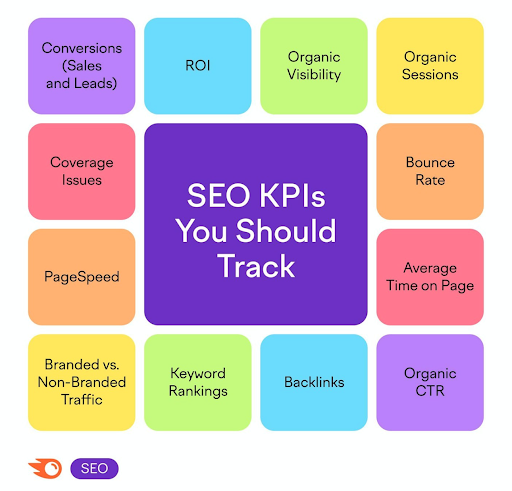
Key Performance Indicators (KPIs)

We’ve all heard of KPIs.

Digital marketing KPIs, according to Digital Dot, are “quantifiable metrics that you can use to measure and monitor the partial and overall success of your digital marketing strategy.”

KPIs help to establish clear goals regarding campaigns and can be used in a variety of marketing approaches, including:

  • “Search Engine Optimization (SEO)
  • Pay Per Click Advertising (PPC)
  • Social Media Marketing
  • Email Marketing”
  • And more

Here are some of the most important KPIs to track when it comes to your digital marketing strategy.

How to Measure the Success of Your Digital Marketing Strategy

At Digital Storyteller, we conduct monthly and quarterly reporting for all of our clients. These reports help us show clients how we’re moving the needle, what’s working for them in their digital marketing strategy, and where we can shift to improve.

Below are some factors we evaluate:

Authority Score

Authority score, according to Semrush, is their “compound domain score that grades the overall quality of a website or a webpage.” Your score can range anywhere from 0 to 100. The higher the score, the more credibility a site typically has. Obviously, an authority score of 100 is #goals, but realistically, a score ranging from 32-48 is where you’ll see a strong organic marketing score lie. 

This figure is determined by a few key factors including:

  • Backlinks
  • Organic keyword rankings
  • Site health
  • Site age
  • Among many other factors

Because of these factors, authority score takes time and consistency to grow. After all, you can’t grow your authority score overnight– even though we wish you could. 

Ranking Keywords

There are, of course, specific keywords that your business will want to rank for. If you’re in the commercial insurance industry in San Diego, for example, some of your keywords might include:

  • “Commercial Insurance San Diego”
  • “Business Insurance”
  • “Business Owner”
  • “Risk Management”
  • And so on

Using a tool like Semrush—which collects research on your business’s SEO, PPC, content, and social media efforts—can help you identify the keywords you are currently ranking for (or currently not).

Information about ranking keywords is critical to making your way up the Google Search Engine Results Page (SERP).

Organic Traffic

Organic traffic is defined as “visitors that land on your website from unpaid sources.”

The amount of organic traffic that your website receives is a huge indication of where or not your marketing strategy is successful.

Average Session Duration

Session duration shows how much time visitors spend on your website. As a general rule of thumb, you want a high session duration. That means people are engaging more on your sight instead of clicking away! 

You can increase session duration by:

  • Providing quality informational content on your site
  • Ensuring your site is easy to navigate; user-friendly
  • Incorporating video content

Bounce Rate

What is bounce rate? Bounce rate indicates how quickly someone exits (or “bounce” from) your website after visiting it. For this reason, we want a high session duration and a low bounce rate. Semrush tells us that “an optimal bounce rate would be in the 26% to 40% range.”

Our goal is to keep people on-page as long as possible. You can decrease your bounce rate by:

  • Making sure your website loads quickly
  • Including all information that prospects might be looking for
  • Creating an easy to navigate the site
  • Prioritizing engaging content
  • Eliminating page errors

Social Media Statistics

We, of course, cannot end this article without talking about social media statistics. In our monthly and quarterly reports we give in-depth information for each social platform being used on:

  • Growth (i.e. followers)
  • Interactions
  • Reach
  • Comments
  • Clicks
  • Number of posts
  • Profile views
  • Impressions

As we’ve worked with our clients, however, we’ve noticed that it’s not uncommon for clients to get hung up on numbers. For example, the number of followers or likes they get on an Instagram post.

It is very important, however, to identify where their prospects spend time. For example, Instagram followers and likes might not matter so much for a financial services company compared to a clothing brand.

While it’s important to be active and engaged on Instagram, a better indication of a financial services company’s success might come from a platform like LinkedIn or YouTube. For those interested in learning more, here’s an article on what social platforms are best for your business to be on.

To reiterate, likes and followers don’t automatically equate to success, but it is important to be engaged and consistent within your social media strategy. Naturally, this means that as time goes on, your following, likes, engagement, etc. should increase.

Notice the trend? Slow and steady growth wins the race. 

Depending on who you ask, engagement might be a more important factor than the number of likes and followers.

Well, that’s all folks. We hoped you learned a thing or two from this article! If you’re interested, read on for more on social media, specifically the difference between social impressions and social engagement.

Digital Marketing Trends for the New Year

And just like that, it’s 2022! We hope your New Year is going wonderfully. 

In celebration of the New Year, we’d like to address some digital marketing trends for the new year. We know… Digital marketing trends are always changing. It can be hard to keep up! But it’s crucial to identify current trends and strategies for your businesses, and we’re here to help. 

Let’s get into it.

Video Marketing

We’ve written about it time and time again. Video marketing is, and will continue to be, an absolutely critical part of your digital marketing strategy in 2022.

Not convinced? Research according to Hubspot shows that video will account for nearly 82% of consumer internet traffic. Wowza!

For those of you who flinch at the word ‘video’ or the idea of crafting one yourself, don’t worry. We promise it’s not as scary (or expensive) as you think. All you need is a quality camera and a microphone. (Even a smartphone can work in most cases!)

To increase search traffic to your website, HubSpot recommends you:

  • Make sure your video contains useful information to solve your ideal customer’s problem
  • Optimize your video on YouTube using relevant keywords

The title of your video is also important. For example, someone would be more likely to click on “how to cook the perfect scrambled eggs” over “how to cook eggs.”

The bottom line about video marketing is: Video is the preferred form of content by all social platforms right now: Instagram, TikTok, YouTube (of course), you name it.

Don’t be discouraged if there is already content out there that is similar to your video (in fact, we guarantee that there will be). The most important thing is finding a way to make your content stand out, says HubSpot.

Honestly, we could talk your ear off about video (and we probably have…) We’ve written about how Instagram reels support your social media marketing strategy and how to connect with your prospects using video. What’s that? You haven’t read those articles yet? Finish this one and then get to it!

SEO

It’s time to brush up on your SEO skills. Search Engine Optimization is still as important as ever. Quality, thought-out SEO is the bread and butter of increasing traffic to your site.

Search engine algorithms, however, are always changing. In fact, a really awesome feature that Google’s algorithm has now adopted is the ability to differentiate between search and intent.

What does this mean? (Aside from a very happy SEO manager on our team…) Google search intent, according to Yoast, is “the term used to describe the purpose of an online search. Google wants to rank pages that best fit the search term someone is using, as well as the search intent behind the search query.”

Because of this new feature, it is crucial that you “segment queries that you want to rank for and make competitor analysis a big part of your SEO strategy,” according to HubSpot.

It’s crazy to think that Google is now smart enough to interpret why you are searching for what you’re searching for.

This is a trend we mentioned back in November in our top five digital marketing trends you can’t ignore article. And guess what? It’s still relevant.

Thanks to AI-powered voice assistants (like Siri, Google, Alexa, and Cortana), millions of people every day search for things online without even touching or being near their phone or computer. User experience and web accessibility today are so important.

This considered, it has become all the more important to optimize your content for voice search. Start 2022 off with a bang by doing so. Not sure where to start? Contact our team today.

Social Media

Truth be told, it feels a little silly to even have to mention social media on this list of digital marketing trends. You’re ten steps behind your competitors if your business is not:

  • Active on social media
  • Providing engaging and informative content on a consistent basis
  • Interacting with prospects and clients

We recommend our clients have profiles on at least:

  • Facebook
  • LinkedIn
  • Instagram
  • Twitter

The platform that you place the greatest amount of attention on will depend on your business’s unique goals and target audience. For example, if you’re selling branded hoodies to Gen Z, Instagram is likely your best bet. If you are an insurance broker, however, you might opt for the more professional nature that LinkedIn offers.

Still don’t believe in the power of social media? According to DigitalMarketing.org, “3.96 billion people use social media today, which accounts for roughly half (51%) of the global population.” Wow!

Think: This is a huge loss for businesses who opt out of a well crafted social media marketing strategy. If they want to stay relevant, the more traditional companies (who are fearful or overwhelmed by social media) need to learn how to adapt.

Rentech Digital recommends that businesses use social media to not only attract prospects but also to retain them. Remember, the more frequently a prospect sees your brand, the greater opportunity to build a trusting relationship with them—and ultimately to convert them into a client.

For those of you who are interested, read on to learn which social media platforms your business should be on and why.

What Is YOUR New Year Resolution? (Marketing Edition!)

Will you outsource your marketing this year? Get your team on a weekly Instagram reel to boost social engagement? Take a course on SEO? Let us know your 2022 New Year Resolution, and if there’s room for our team to help!
Read on to hear our team’s 2022 New Year Resolutions. Cheers!

new years resolutions cookies and written notes

Happy New Year! Wowza, the holidays are over and it’s officially time for a fresh start. You already know, this means it’s time for some 2022 New Year Resolutions! Hopefully, we haven’t broken them by the time this gets posted… (As long as they weren’t resolutions like no cursing or drinking, we should be on track!)Check out the video below to hear some of our team’s 2022 New Year’s Resolutions! Or, if you’re boring you can read along. Let’s get into it!

Caroline LoPresti, Social Media Manager: “My new year’s resolution is to worry less about the future and focus more on the present.”

Kelsey Arvidson, Content Specialist: “I wanna cook more recipes in the new year every week or maybe every month ’cause that’s more realistic.”

Magdi Cook, Graphic & Web Design Manager: “My new year’s resolution is to get involved in dance classes again and to start a gratitude journal where I journal 10 items that I’m grateful for every night.”

Devin Aubert, SEO Manager: “My 2022 new year’s resolution is to be the coolest, funnest aunt to my soon-to-be-born baby niece or nephew.”

Jackie Berens, Client Success Manager: “My new year’s resolution is to make my life my medicine.”

Madi Lindley, Social Media Specialist: “I want to travel more this year and see new places.”

Beatriz Carias, Content Specialist: “I wanna get more involved in my community and volunteer more.”

Becca Jones, Content Specialist: “My new year’s resolution is to make time for reading before bed.”

Amanda Rogers, Founder & CCO: “I can’t make new year’s resolutions. I’m too old and tired.”


We know, you really enjoyed this. We did, too! You know what else you will enjoy? Our Owner & CEO’s Chardonnay Review Series.

His name is Andrew Marr but we like to call him the ranting Scot (yes, he’s from Scotland). Anyway, there are 35 reviews, so get ready to binge-watch!

Or, if you’re already missing the holiday season, get a load of our team’s favorite family traditions on the blog.

Holiday Traditions

It’s the holiday season—hooray! At Digital Storyteller, we love our team (and no, it’s not just because our bosses got us boujee gifts like custom tumblers and embroidered Lululemon hoodies…)

With Christmas right around the corner, we’re sharing the opportunity to get to know the parts that make our team who we are. I mean, our team is awesome! We hire for people, which yes, we know, is a little unconventional these days… But hey! It’s working for us. We pride ourselves on having amazing company culture. Want to take a peak?

Keep reading to hear some of our team’s favorite holiday traditions, Christmas songs that make them cringe, and for FUN holiday photos!

The Founders

Q: What is your favorite family tradition?

A: “My mom took me to see the Nutcracker every year at Christmas at Lincoln Center in NYC (where I’m from) we’d dress up and go out in the cold and take the subway up to the theatre. We did that every year for 30 years.  Now, I take Ella, my daughter every year.  The best part is the time together and being unnecessarily judg-y about the dancers! I also love to go get the Christmas tree and decorate while listening to Christmas music and having eggnog with bourbon.” 

-Amanda Rogers, Founder Chief Creative Officer

Q: What do you like most about Christmas?

A: “What I like the most about Christmas is opening gifts on Christmas morning.  I haven’t learned how to ask for something in a way that doesn’t end up with 5 of them.  But I kind of like that. Amanda bought me 5 cashmere sweaters last year. I had mentioned that I’d like a cashmere sweater… We live in San Diego.  Just saying.”

-Andrew Marr, Owner, CEO

The Content Team

Q: What is your favorite family tradition?

A: “My family spends every Christmas Eve cooking up a huge meal! We make tamales, turkey, ham, pepian, and many other yummy traditional Guatemalan dishes.”

“After cooking, we feast on all of the dishes we worked so hard to make together while catching up with family we haven’t seen in a while. We chat, reminisce over old memories, and play games until the clock strikes midnight. Once midnight hits, all of the kids (yes that still includes me) zoom to the Christmas tree to open presents. We’re all usually up until 2 am playing with our new gifts or still chatting together.

“It’s one of my favorite family traditions because it’s rooted in spending quality time together and making more cherished memories.” —Beatriz Carias, Content Specialist

Q: What is a funny family tradition of yours?

A: “My family always wears these glasses when they pick me up at the airport!” —Kelsey Arvidson, Content Specialist

Q: What is your favorite family tradition?

A: “My favorite holiday tradition is on Christmas Eve all the young cousins sit together in the master bedroom and read Chitty Chitty Bang Bang (which over the years has been not so subtly turned into a drinking game for adults participating…) We read the story as we listen for Santa’s bells. When we hear the sleigh bells ring, all the kids race down the stairs and run down the driveway to try to catch Santa and the reindeer and find what presents he left them on the front porch. It’s a tradition that I’ve done my entire life and have loved to share with my little cousins since.” —Devin Aubert, SEO Manager

Q: What is your favorite family tradition?

A: “My favorite family tradition is something my family calls ‘family baking day!’ Every year in December, my family heads over to my Grandma’s house early in the morning to bake over 1,000 cookies! We bake every kind of cookie you can think of. My favorites are the ‘Turtles’—pretzels, topped with a Rolo and a pecan. Then, we package up the cookies for teachers, family, and friends. It takes all day!” —Becca Jones, Content Specialist

Q: What is your favorite family tradition?

A: “My favorite family tradition during the holidays is Christmas morning. Ever since I was a young girl, we would wake up at 5 am and wait in one of the siblings rooms for our parents to call us down. We would run out of the room, my parents with a video recorder in hand, with grins from ear to ear. After we finish opening up our gifts, my mom starts making breakfast and the smell of bacon flows throughout the house.” —Jackie Berens, Client Success Manager

The Design Team

Q: What is your favorite family tradition?

A: “My favorite holiday tradition is decorating my home and Christmas tree with my family! Every year, we light the fire pit, blast Christmas music, hang garland and streamers around the windows and staircase, put ornaments on the tree, and drink hot cocoa. And of course, the tradition wouldn’t be the same without our dogs going insane and trying to eat all of the decorations in the process!” —Magdi Cook, Graphic and Web Design Manager

Q: What kind of holiday shopper are you: Black Friday? Christmas Eve? Yearlong hoarder?

A: “I’m a year-long shopper because most of my gifts end up being handmade, and that takes time. So, if it’s a cross-stitch, painted ornament, or re-covered book, it’s a year-long process to get it planned and looking good!” —Shay Larby, Junior Graphic Designer

The Social Team

Q: What kind of holiday shopper are you: Black Friday? Christmas Eve? Yearlong hoarder?

A: “Holiday shopping is my one excuse to shop because it’s all on sale, but that doesn’t stop me from shopping all year round of course… ;)” —Caroline LoPresti, Social Media Manager

Q: What is your favorite family tradition? And what Christmas song makes you cringe?

A: My favorite family tradition is taking snowy walks in the city to get hot chocolate when I go home to Boston. The Christmas song that makes me cringe is… nope, can’t think of a single one they are all amazing…especially the Michael Bublé Christmas album (obvi)!” —Chris Preller, Social Media Coordinator

Q: What is your favorite family tradition? 

A: “My favorite family tradition is our white elephant gift exchange that we have on Christmas Eve. Everyone contributes very random gifts, some good and some bad. My favorite gifts that I’ve ended up with were the Snoop Dogg cookbook and a blanket hoodie!” —Madi Lindley, Social Media Specialist

Are you in desperate need of some last-minute gift ideas? Check out this article where we detail holiday gifting strategies for B2B businesses!

Rebrand

When it comes to “branding,” the term might seem a wee bit vague. Chances are the first things that come to mind are logos, colors, and fonts! While all of these elements are integral pieces of creating your business’s brand identity, branding, and rebranding, runs much deeper.

Here’s everything you need to know about rebranding your business.

What Is Branding? Why Is It Important?

Branding, according to The Branding Journal, is defined as “the process of giving a meaning to [a] specific organization, company, products or services by creating and shaping a brand in consumers’ minds.”

Branding “is a strategy designed by organizations to help people to quickly identify and experience their brand, and give them a reason to choose their products over the competition’s, by clarifying what this particular brand is and is not.”

Branding is important for not only consumers but also employees, shareholders, and third parties.

One of the most important parts of branding, which is wildly overlooked in our personal opinion, is the word “meaning” in the above definition. Too often, a brand becomes about the “aesthetic” or the colors.

Having a stunning logo is great, but what is the meaning behind it? Need a story to illustrate just what we mean? We’ve got the perfect client for you.

The Story of The Golden Screw

Meet John Milikowsky, founder of Milikowsky Tax Law. John is a tax attorney who focuses on helping clients navigate government agency audits from Employment Development Department (EDD) to Internal Revenue Service (IRS). 

John is one of our superstar clients at Digital Storyteller. (We actually refer to him as our ‘unicorn.’)

Here’s a before and after of the Milikowsky Tax Law logo.

Before Working With Digital Storyteller

Milikowsky Tax Law

After Working With Digital Storyteller

Milikowsky Tax Law

Now, of course, there’s a lot more that goes into branding than just your logo—but more on that later.

For now, let’s travel back in time with John to hear about how his new logo came to be, what happened when he sat down with us to explain the origins of his business, and how his skill set makes him a fantastic tax lawyer. Here’s what John had to say:

“It’s 1987 and I’m 10 years old. I’m sitting in a windowless supply room in the back of my parents’ lighting store on a stool and in front of me is an oil barrel filled with screws. Machine screws, wood screws, drywall screws, Phillips screws, you get the idea… a lot of screws.”

John’s task? Sort these screws into containers. Sort, sort, sort… In that entire summer, John never got through more than an inch’s worth of progress in sorting those screws.

“In the middle of that summer, I realized I had a choice to make… I could be furious, resentful, victimized by the mundane monotonous task set in front of me… or, I could do it well and fast. I could be the best at screw sorting.”

Not seeing where this story is going? Hold tight.

John describes his first few years of audits with his tax law clients. “They handed me their metaphorical oil barrels filled with numbers: profit and loss statements for three, four, five years, receipts faded with time, and transactions whose recipients had long gone out of business,” says John. “I came to appreciate that summer of sorting. That training in detail work, that patience for sifting through the most minute details.”

John’s passion is the detective work it takes to uncover the one piece of information that makes all the rest of a company’s business narrative fall into place. 

Like finding a needle in a haystack, John is equipped with the attention to detail to find ‘the golden screw,’ if you will.

After unpacking this story with our team, we were able to create a logo with meaning, as opposed to simple colors and font slapped on a page. In his logo, the “M” in Milikowsky Tax Law is encircled by tiny screws with the golden screw crowning the “i” 

What Are the Levels of Rebranding?

*Hint* A rebrand concerns more than just your logo! Knowing this as a business owner, however, you might be asking yourself, “How long will a rebrand take me?” and more importantly to some, “How much will it cost me?”

Well, the amount of money that you pay for a rebrand is dependent on the size of your company. For example, rebranding a mom-and-pop cabinetry shop isn’t going to cost the same as a rebrand of Walmart or Target.

Now, let’s dive into the different levels of rebranding.

The Brand Refresh

A refresh is the most simple level of rebranding, and might include:

  • Brand Discovery
  • Visual Identity
  • Corporate Stationery
  • Website
  • Copywriting
  • Photography

This timeline typically lasts three to four months.

The Brand Reboot

According to Ignyte, this level of rebranding is best for companies “who are dealing with the systemic issues that typically accompany business growth and/or age,” and, in addition to everything included in a refresh, might include:

  • Customer Research
  • Brand Audit
  • Brand Strategy Naming and Tagline
  • Brand Identity
  • Marketing Collateral

This timeline typically lasts six to eight months.

The Full Rebrand

*Cough cough* Mark Zuckerberg rebranding ‘Facebook’ to ‘Meta.’ (Can’t say we are huge fans…)

Anyway, according to Web FX, a full rebrand involves “changing every aspect of your brand,” including:

  • Company name
  • Logo
  • Tone of voice for your company

A fantastic example of a full rebrand is Nike. In 1964, Blue Ribbon Sports (now Nike) was founded. Seven years later, “Blue Ribbon Sports did a complete rebrand and became Nike,” according to Web FX. Blue Ribbon Sports changed everything: colors, logo, name, tone of voice.

Blue Ribbon Sports Nike Rebrand

Think of the full rebrand as the ultimate glow-up for your company; you’re entirely new. As you could guess, this is the most expensive level of rebranding.

This process could take up to a year or more in some cases.

The Meaning Behind Your Branding

So, it’s time for some self-reflection. 

Would you be willing to send your website to everyone you know right now, as is? If the answer is no, consider why not. What about your branding doesn’t satisfy you?

Branding is so much more than colors and fonts. Here are some questions to get you thinking about your branding:

  1. How does your current branding reflect you as a company?
  2. If you were a consumer in your target demographic, would you want to work with your company?
  3. How do people feel when they come to your site or visit your social media? Are you pushing out consistent content?
  4. How does your brand make people feel? Safe, excited, confusing, overwhelmed?

A Quick Bit on Font Psychology

Well, what is font psychology? According to this article by Canva, “font psychology [is] the study of how different fonts impact thoughts, feelings, and behaviors.” For example, Comic Sans as your primary brand font might evoke a very different reaction than if you were to use Arial, Roboto, or Montserrat.

By understanding font psychology, which you can do more of here, you will be able to choose the best fonts for your brand.

The Value of a Rebrand

Many brands consider rebranding when they realize that their mission, or their ‘why,’ isn’t being reflected accurately in their existing brand. The value of a rebrand, when done correctly, is priceless. Think: Do you think Nike would still have the global brand recognition that it does if it were still Blue Ribbon Sports, branding and all? Most likely not.

At Digital Storyteller, we begin every client relationship with a Brand Storytelling Session to get to know your business at its core. Because after all, we can’t accurately represent your brand until we truly understand who you are, who your audience is, and what your goals are. Get in touch with us today to learn more about your free Brand Storytelling Session deliverable.

Outsourced Marketing

When it comes to marketing your business, there are a lot of options available to you. Not all marketing efforts, however, are created equal.

Do you know what outsourced digital marketing is? How much does it cost to outsource marketing? How exactly does it work? Here’s what to expect working with an outsourced digital marketing agency.

What Does It Mean to Outsource Your Marketing?

The word ‘outsource,’ by definition, means to “obtain (goods or a service) from an outside or foreign supplier, especially in place of an internal source,” according to Google.

Therefore, as Precision Marketing Group puts it, outsourced marketing is “the engagement of a professional marketing firm to serve as your own firm’s marketing department.” Simply put, outsourced marketing means letting a third party take care of your marketing efforts. You then have more time to do what you do best—which is run your business.

Who Can You Expect on an Outsourced Marketing Team?

Well, depending on the outsourced marketing agency’s specialties, you could work in close contact with a variety of different marketers. At Digital Storyteller, for example, our team is made up of:

  • A Creative Director
  • Social Media Manager
  • Social Media Coordinator
  • Social Media Specialist
  • A Client Success Manager
  • SEO Manager
  • Graphic & Web Design Manager
  • Junior Graphic Designer
  • And numerous content specialists!

Why Would You Hire an Outsourced Marketing Team?

By hiring an outsourced marketing team, you allow your team to place focus on running your business.

An outsourced digital marketing agency covers every aspect of marketing so you don’t have to worry about:

  • Posting creative, consistent content
  • SEO optimization
  • Managing your online reputation
  • Website design and branding
  • Staying up to date with social media updates and algorithms 

The list goes on…

As we mentioned previously, by hiring an outsourced digital marketing team, you gain access to creative directors, social media experts, content specialists, and more, at a fraction of the cost it would take to hire an in-house team.

All the support you need is wrapped up into one flat monthly rate.

How Much Does It Cost to Outsource My Marketing?

Now, as a business owner, one of the first things you’re wondering when you hear about the benefits of outsourced marketing is: How much is this going to cost me? The short answer? It’s cheaper than doing it yourself. 

Let’s talk numbers. Our most popular package at Digital Storyteller sits at $5K a month, which totals $60k for the year. Sound like a lot? Let’s consider the cost breakdown of hiring a team of four marketers in-house instead:

Hiring four marketing experts in-house, after salaries and benefits will cost your company $260,000 annually, plus some $16,000 for new hire costs. In just one year, your company has racked up $276,000. That’s only with four experts. The cost grows as you continue building your own team. 

We know it’s not spooky season anymore, but for more frightening math, visit this blog post where we break down the cost-benefit of outsourced digital marketing.

At Digital Storyteller, we try to make things less frightening, which is why our most popular digital marketing package is $60K annually as opposed to $276,000.

Our rate gives you access to an entire team that’s also dedicated to building your business. Outsourced marketing is a great, cost-effective way to invest in your company’s marketing efforts.

How Do You Know if You’re a Good Fit to Outsource Your Marketing?

There are many reasons why outsourcing your marketing is a great option. Here are some signs you’re a good fit.

  • Your current marketing efforts are not consistent
  • The world of digital marketing is overwhelming to you — so many changes are constantly taking place!
  • You want to focus on what’s most important: running your business
  • You don’t have a marketing “strategy”
  • You want to take your marketing to the next level, but aren’t sure how to
  • The idea of hiring someone in-house worries you — how could a single person have all of the marketing skills I need?
  • You are ready to trust an agency to get to know your business and market for you

How Effective Marketing Can Be When You Let Your Outsourced Agency Do Their Job

The last bullet above is SO important: “You are ready to trust an agency to get to know your business and market for you.”

When companies bring in outsourced digital marketing agencies but don’t let them do their job (i.e. hold off on pushing content, stay inside their comfort zone), the results of outsourced marketing are poor. 

Part of our job is to challenge you! We get that it can be hard to let someone take the reins and run a big piece of your company. But that’s what we know and do best. You’re juggling a million things when running your own business, let us take a large chunk off of your plate so you can focus on what you love to do.

Here’s an example of a client who lets us do just that, take the reins.

SBMA is an Affordable Care Act (ACA) compliant Minimum Essential Coverage (MEC) benefits provider that provides affordable coverage for thousands of employers. We’ve been working with SBMA for nearly two years. Here’s what we’ve done for them during our partnership.

When we first started working with SBMA, they had very few keywords. What are keywords, you might ask? Check out this article for everything you need to know. 

Anyway, all of the keywords that SBMA was ranking for on Google were branded keywords (think names of specific employees and the literal name of their company ‘SBMA).

Long story short, if you only rank for branded keywords, you won’t come up on Google very often, unless someone is searching that exact, specific keyword. You really want to rank for more than just branded keywords.  

SBMA, as a benefits provider, would also want to rank for things like ‘MEC plan,’ ‘Health Plan Administrators,’ and ‘Worksite Benefits,’ to name a few.

With our ongoing content marketing strategy, we’ve been able to work wonders for them. Here are some numbers to prove it.

Currently, 80% of SBMA’s site traffic comes from organic search. Last October 2020, SBMA had 2,155 site users in a month. This October, in 2021, SBMA had 3,566.

Additionally, they had a 60% increase in their authority score. Last October, they had a domain authority score of 16 whereas this October they have grown to 23.

Authority score is based on a number of various factors including site health, organic keyword growth, backlinks, and more. It takes time, research, and consistent effort to grow an authority score, so a seven-figure jump in authority score is incredible.

When we first began working with SBMA, they let us know that they wanted to rank for ‘MEC.’ Now, SBMA dominates the organic search engine results page (SERP) when it comes to the ‘MEC’ space.

Lastly, SBMA currently ranks for 965 keywords whereas last October they ranked for 408. The graph below shows SBMA’s organic keyword growth over time.

SBMA Organic Keywords

Marketing: It’s What We Do Best

The goal of an outsourced digital marketing agency is to understand your business and your brand voice to then let the world know how awesome you are.

We start every engagement with a Brand Storytelling Session where we identify your unique brand voice. Then, our team uses bi-weekly client calls, Monday emails, and content calendars to make sure you know what’s happening, always.

We have monthly reporting where we let you know what the return on investment that you’re getting is from your relationship with us.

Of course, there’s always a team member available to you just a call, email, or even text away. Not to toot our own horn, but we’ve been told on multiple occasions that our bi-weekly calls are their favorite calls!

Happy with the direction we’re headed in? We’ll keep running that way. Want to tweak something? More than happy to adjust.

We’ll bring you fresh ideas from our kick*** creative team from a relationship built on trust. Because that’s the beauty of digital marketing.

For those who are interested in learning more about the difference between outsourced marketing and in-house marketing, read on here.

Brand Voice

Author Robert McKee once said, “Storytelling is the most powerful way to put ideas into the world.” And he was right!

At Digital Storyteller, we begin all of our partnerships with a strong foundation—your very own ‘brand storytelling session’ (BSTS). After all, we’re an outsourced digital marketing agency, which means we will be creating content as if we were you. This BSTS is crucial in order to be able to do what we do best (…marketing!).

If a ‘brand storytelling session’ sounds a bit like another language, we’re sorry! We’ll explain. Better yet, Amanda Rogers, Owner and Chief Creative Officer at Digital Storyteller can give you the lowdown and answer all of your juicy questions, like why is your brand storytelling session important? And what the heck is it anyway!?

Let’s get into it.

What is Brand Storytelling?

Brand storytelling has become kind of a buzzword. People use it to mean all kinds of things. They use it to mean:

  • Branding that means something to you
  • Storytelling for individuals

What Do You Do During a Brand Storytelling Session?

In our Brand Storytelling Sessions, we do things a bit differently. We block out two hours on our calendar to zoom with you and get to know your brand at its core.

We know it sounds intense, but don’t worry. Our favorite description that a client gave us at the end of a Brand Storytelling Session was, “I was expecting a root canal and I got a massage.” Yay for free massages! 

For Digital Storyteller, the Brand Storytelling Session grew naturally out of questions we had to ask clients over and over again and the research we did to better craft clients’ websites, content, and content marketing strategies.

A brand storytelling session focuses primarily on finding out what your ‘brand voice’ is. In other words, what your brand archetype is. 

Brand Archetypes

What’s a brand archetype? We’re glad you asked. Brand archetypes are as old as Greek tragedy (sadly, we can’t take credit for making them up…) The 12 brand archetypes that we use at Digital Storyteller are:

  • The Innocent
  • Everyman
  • Hero
  • Outlaw
  • Explorer
  • Creator
  • Ruler
  • Magician
  • Lover
  • Caregiver
  • Jester
  • Sage

Don’t worry, we cover what all of these archetypes mean during your Brand Storytelling Session!

What Happens After Your Brand Storytelling Session?

We’re all for transparency. After your two-hour block, we have a comprehensive overview of:

  • How you talk about what you do
  • How you feel about your company name
  • What your brand archetype is

From there, we can start to build the kind of marketing strategy that is unique to your company.

The Timeline

A week after a Brand Storytelling Session, you will receive a well-designed deliverable.

A few days after that, we get on the phone and set a kickoff call, if you decide we’re the right fit for you!

After our one-hour kickoff call, we set weekly one-hour meetings for the first month of our partnership, followed by bi-weekly meetings following. 

Why Is a Brand Storytelling Session Important?

As we say at Digital Storyteller, marketing without a brand voice is like a margarita without tequila… Useless!

Defining your brand voice through a Brand Storytelling Session shortens your sales cycle because having a clear brand voice makes people feel like they already know you when they walk into a room with you.

It helps build trust, and it makes prospects feel at ease as they’ve heard your brand voice consistently across your website, content, and social posts.

When you pick a brand voice and choose a brand archetype, it’s about the way in which you speak, not what you’re talking about. 

Conducting a Brand Storytelling Session helps us to truly understand a client’s brand voice, their brand archetype, and helps us to be able to write in their voice.

Amanda, Founder and Creative Director at Digital Storyteller, put it best. “I can talk about something that’s highly consequential in a number of different brand voices. The way you speak about what you do is what sets you apart from your competitors… A Brand Storytelling Session is the uncovering of the way in which you tell your own unique story.”

If you couldn’t tell by Amanda’s spiel, a BSTS isn’t anything to be afraid of. Don’t believe us? Check out what one of our clients, Todd Regan, said about his BSTS. (P.S. He wasn’t excited!)

“Looking at the [brand storytelling session] appointment on my calendar, I thought this is going be so painful – it was the opposite, so insightful, valuable, and fun.” —Todd Regan Chief Operating Officer at Payroll Hub

A brand storytelling session is crucial for all of you out there who struggle to explain to your drunk aunt what business you’re in every Thanksgiving. If you’re not clear on what you do, how can your prospects and clients be?

Plus, we can’t—or any outsourced marketing agency, for that matter—accurately represent your brand until we truly understand who you are, your audience, and your goals. Our brand storytelling sessions answer all of these questions.

We’re so confident in our ability to surprise and delight you that your initial BSTS session and deliverable are free.

Interested in learning more about the importance of brand storytelling? Check out this article.

Digital Marketing

At Digital Storyteller, we know well that digital marketing is an ever-changing field. Sometimes, it can feel like a full-time job just keeping up with all of the algorithms and constant updates!

(C’mon, Zuckerberg! Give us a break!) Just kidding…

In all seriousness, the best thing you can do for your business—whether you do it yourself or hire an outsourced agency like us to save you time and money—is do your best to stay current with the top digital marketing trends.

Don’t worry, we’ll give you a hand! Here are the top five digital marketing trends you can’t ignore today!

Video Content

If you’re not currently living under a rock, chances are you know that video is the number one media that social channels are pushing right now.

The statistics say it all. Did you know that in June 2021, TikTok reached 3 BILLION downloads? In the five short years that the video-sharing app has existed, it managed to snag the 7th most downloaded app for the 2010s, according to App Annie.

Even Instagram has jumped on the video bandwagon. In June 2021, Adam Mosseri, head of Instagram, said in a video that Instagram is no longer a photo-sharing app. Instead, Instagram will prioritize video content, leaning into the high level of success that they are observing competitors like TikTok and YouTube achieve.

So, get your business ready to push out some awesome video content if you haven’t already—Instagram reels, TikToks, explainer videos, testimonials, culture videos, the list goes on.

Value-Driven Content

Although our digital marketing agency lives by the phrase “content is king,” we’d like to make an important modification to this term coined by marketing whiz Neil Patel.

“QUALITY content is king.”

Just think: Any person, at any given moment, has an enormous surplus of content that they could decide to consume. It’s almost overwhelming. So, consider this: Why should someone click on your page rather than your competitor? What are you offering them that your competitor is not?

Sure, you may be handing out eBooks, but is the information different? Or is it generic? Your best bet at gaining clients’ trust is by offering content that drives value.

This means no carelessly written articles with typos just for the sake of posting something. You want to shoot for quality, long-form content.

It’s equally important to do so in a way that doesn’t come off as too salesy either. We know, it’s a difficult line to straddle…

To provide an example of quality content, picture this. You’re at your local mall and you see an electric wine bottle opener. (Oooh!) What would make you more prone to purchasing said wine opener?

A bland instruction manual about what the product is and how it works, or a beautifully designed pamphlet showing how the wine opener will save you time and frustration for years to come? We think you know your answer. Say goodbye to stubborn synthetic corks!

But anyway, the point is long-form, value-driven content is key in your digital marketing strategy.

Hyper-Personalized Content

It has happened to all of us. You’re on a website viewing a product; it could be shoes, decor, food, doesn’t matter. Then, you leave the page without making a purchase.

A few hours later you receive an item with the subject line “Get it before it sells out!” or “You forgot something…” You click into the email… It’s the exact product you’d been looking at just hours before.

Weird, right? Well, not really in the world of digital marketing. Welcome to hyper-personalized content!

Hyper-personalized content is the third digital marketing trend you can’t ignore. Personalized content is no new feat, and as you can tell, we’re not talking about adding a simple first name personalization in your email marketing. (That might have been impressive five years ago, but times have changed).

For businesses looking to generate more traffic and increase conversion rates, you have to get really nitty-gritty about who your target audience is and more importantly, what they’re looking for and at. By using artificial intelligence (AI), you can collect information about individuals who are engaging with your business and track their behavior to target them more effectively.

There are many third-party software companies that can help you obtain data to create this hyper-personalized content. Some of our favorites include:

“Hey Siri, search ‘content marketing’ on Google!” Thanks to AI-powered voice assistants, millions of people every day search for things online without even touching or being near their phone or computer.

User experience and web accessibility today are so important. With the rise of voice search, including Siri, Google, Alexa, and Cortana, it has become all the more important to make sure your content is optimized for voice search. Keep your eyes out for a full article on how to optimize your content for voice search soon!

Easy to Contact

Today, we live in a world where delayed gratification is not our friend. At least not when we have a question about a product, service, or business! Whether you’re messaging your favorite clothing company, your hairstylist, or a restaurant, chances are you value a quick response on a user-friendly platform.

Your prospects are no different. If you’re not available 24/7, using AI to ensure your prospects get timely responses is a no-brainer!

Hiring an Outsourced Digital Marketing Agency

Top Five Digital Marketing Trends You Can’t Ignore

We know, there are a lot of bases to cover. The best thing you can do is focus on what’s hot now and tailor your content marketing strategy as such. Recognize current trends and use them to your advantage in your digital marketing efforts.

Still sounds a bit scary? Check out this article on the Top 10 Resources for Digital Marketers!

At Digital Storyteller, we’re your go-to for your outsourced digital marketing needs. As our client, our team will keep you up to date on all the latest digital marketing trends.

Get in touch today to schedule your free Brand Storytelling session. What is Brand Storytelling you might ask? Don’t worry, we’ve got an article for that, too!

RESOURCES

Blog
Privacy Policy

© Digital Storyteller 2026

Get The Secret Sauce

Delivered right to your inbox (napkins optional)


© Digital Storyteller 2026