
man using a phone

If you’ve ever wondered whether you should be asking for client testimonials, the answer is a hard yes – and if you’re not doing it consistently, you’re leaving serious credibility on the table.

We hear the same questions from business owners all the time: “Do people actually read testimonials?” “Should I be doing video testimonials?” “How do I even bring it up without feeling awkward?”

This post breaks down exactly how to ask for client testimonials, why they matter more than ever, and the five-step process that makes collecting them simple. Our CEO, Andrew Marr, also walks through the video testimonial approach in more detail below.

Why Client Testimonials Are a Non-Negotiable Marketing Asset

You’ve done it yourself -scoured Google reviews before trying a new restaurant, or checked Yelp before booking a service. Your prospects do the exact same thing before deciding whether to work with you.

A strong testimonial can be the deciding factor between a prospect choosing you or your competitor. Boast found that 72% of consumers say positive testimonials directly increase their trust in a business. That’s not a small number – that’s the majority of your potential clients making decisions based on what others say about you.

Collecting and showcasing client testimonials lets your best clients do the selling for you. It builds trust before a prospect ever gets on a call, and it positions your business as one that consistently delivers results.

Why Video Testimonials Are Even More Powerful

Written testimonials are valuable, but video testimonials take it a step further. They put a face and a voice behind the words, which makes them far more persuasive and harder to dismiss.

Asking a client to record a short video testimonial might feel bold – many of us weren’t raised to talk openly about ourselves or ask others to advocate for us. But here’s the reframe: when you ask a client for a testimonial, you’re not asking for a favor. You’re giving them a platform to share a genuine success story.

The questions that resonate most with future clients are simple ones:

  • How did we solve a problem for you?
  • How did we help you save time or money?
  • What was it like to work with us?
  • Why would you recommend us to others?
  • How have others in your industry benefited from what we do?

Video testimonials don’t need to be long or highly produced. A focused, 30-second to one-minute video recorded on a phone or over Zoom is more than enough. If your clients need a little guidance on how to record one well, send them our article: “How to Record a Great Zoom Testimonial.”

Once you have the video, distribute it everywhere – your website, blog posts, LinkedIn, email campaigns, and beyond. A great testimonial should work hard across every channel.

How to Ask for Client Testimonials: A Simple 5-Step Process

The biggest obstacle most businesses face is overcomplicating the ask. Here’s a straightforward process that works.

Step 1: Ask – It Really Is That Simple

No testimonial has ever arrived without someone asking for it. Reach out to long-term clients who know your work well, newly satisfied clients who are still riding the high of a great outcome, and anyone in between. The ask itself is the hardest part, and it’s easier than you think.

Step 2: Remove All Friction

Make it effortless for your clients to respond. A short form with two or three guided questions takes them five minutes or less. Timing matters too – ask while your work together is still fresh, either during the engagement or immediately after wrapping up. A quick text message works just as well as an email.

Step 3: Offer Something in Return

You don’t have to send a gift card to incentivize a testimonial. Think about what your clients actually value – sometimes it’s as simple as featuring their business name and logo on your website, giving them added visibility with your audience.

Step 4: Publish It Where It Can Do the Most Work

A testimonial sitting in your inbox isn’t helping anyone. Post it on your website with a professional headshot, share it on social media, embed it in relevant blog posts, and include it in your sales materials. The more places a testimonial lives, the harder it works for you.

Step 5: Put Your Testimonials Where People Are Already Looking

Don’t let a great testimonial live in just one place. Your homepage and services pages are the obvious starting points, but think beyond your website. Post testimonials on your Google Business Profile, where they directly influence local search rankings and first impressions. Share them as social proof on LinkedIn, Facebook, and Instagram. Drop them into email campaigns and proposals. The more surfaces a testimonial appears on, the more trust it builds – and the more work it does for your business without any extra effort on your part.

Start Collecting Client Testimonials Today

Knowing how to ask for client testimonials is only half the battle – the other half is building it into a consistent habit. The businesses that do this well don’t wait for clients to volunteer praise. They have a system, they ask every time, and they put those testimonials to work across every marketing channel.

If you want help building that system or turning client stories into compelling content, let’s talk.

Frequently Asked Questions About Client Testimonials

How do you ask a client for a testimonial?

The best way to ask for a client testimonial is to keep it simple and timely. Reach out shortly after delivering a successful result and explain that their feedback would help other businesses understand the value of your services. Providing a few guided questions makes the process easier and increases the likelihood of receiving a response.

When should you ask for a client testimonial?

The ideal time to ask for a testimonial is when a client has recently experienced a positive outcome. This could be after completing a project, reaching a milestone, achieving measurable results, or expressing satisfaction with your work. Asking while the experience is still fresh typically leads to stronger and more detailed testimonials.

Should I ask for written or video testimonials?

Both written and video testimonials can be effective. Written testimonials are easier for clients to provide and can be quickly added to your website and marketing materials. Video testimonials add a personal element by allowing prospects to see and hear real clients share their experiences, which can build trust more quickly.

What questions should I ask in a client testimonial?

Focus on questions that highlight the client’s experience and results. Helpful questions include:

  • What challenge were you facing before working with us?
  • How did our services help solve that problem?
  • What results did you achieve?
  • What was it like working with our team?
  • Would you recommend us to others, and why?

Can I use client testimonials on my website and social media?

Yes, but it’s important to get permission before publishing a client’s testimonial. Once approved, testimonials can be used on your website, Google Business Profile, social media platforms, email campaigns, proposals, and other marketing materials to build credibility and trust.

How many client testimonials should my business have?

There is no perfect number, but consistency matters. Businesses should aim to collect testimonials regularly rather than gathering a large batch once and stopping. A steady stream of fresh testimonials demonstrates ongoing client satisfaction and helps keep your marketing content relevant.

Do client testimonials help with SEO?

Client testimonials can support SEO by adding fresh, relevant content to your website and increasing trust signals for visitors. Reviews on platforms like Google Business Profile can also improve local search visibility and help potential customers find your business more easily.

What if a client doesn’t respond to my testimonial request?

It’s common for busy clients to miss or forget testimonial requests. A polite follow-up message a week or two later is often enough. Making the process as simple as possible, such as providing a short form or a few questions, can significantly improve response rates.

Should I offer incentives for testimonials?

In most cases, satisfied clients are willing to provide testimonials without financial incentives. Instead of offering gifts or payments, consider highlighting their business on your website or social channels, which can provide additional exposure and value.

How often should I ask for client testimonials?

Asking for testimonials should be part of your regular client process. Whether you serve a handful of clients each month or hundreds each year, creating a repeatable system ensures you’re consistently collecting fresh social proof and strengthening your credibility over time.

girl sitting at desk on zoom

The cat’s out of the bag. Video is the hottest media source out there right now—and therefore, should be an integral part of your digital marketing strategy.

The challenge that many business owners face, however, is not having the bandwidth or the knowledge on how to record quality video without breaking the bank. (No, you don’t have to pay a professional videographer for three hours of in-person recording…)

If you want to connect with your prospects, you have to use video. So, how can you do it yourself? Here are some suggestions on how to get the most out of a video that is recorded over Zoom, in-person, or even on an iPhone:

The Set-Up

Lighting, sound, and positioning are important. Here are some valuable, simple tips regarding each element.

  1. Make sure light comes from in front of you, not behind. A big window showcasing a garden behind you might serve as a lovely Zoom backdrop, but without lighting on your face, you’ll be washed out.
  2. Give yourself some space around your head. Frame yourself from mid-bicep up with a hand’s width of headroom above your head.
  3. Sit a little lower than the camera. There is a reason selfies are always up at a 45º angle—and while that’s a little extreme, a shot from below is rarely flattering.
  4. Give yourself some depth of field. Leave room behind you, it’s visually more interesting than a blank wall a foot behind you.
  5. When possible, forego the zoom background for something real. Unless you have piles of boxes or a messy bed, a real background looks better. Not going to work for you, we recommend one of these virtual zoom backgrounds. (Plus, they’re free!)
  6. If you have a lavalier mic or a stationary mic, use it. If you don’t, make sure the birds chirping, car horns tooting, and leaf blower blowing in the background is as muted as possible.

The Attire

Dress to the nines! Well, not quite to the nines… But you should certainly look presentable!

The Trunk Club recommends that you choose your meeting wardrobe the same as you would for an in-person work meeting or job interview.

Dress and prepare yourself as you would if you were meeting a prospect for a 9:00 am meeting in the office. 

Men, a collared shirt; ladies, a nice top. Do your hair and—if you choose—makeup.

What to Say in a Video Testimonial

This is where we find our clients get the most tripped up. Firstly, you want to showcase happy customers and success stories of yours. Why? You can build trust in a video testimonial by discussing your ideal client’s pain points and describing how your product or service helped them.

Here are a few examples of what to say in a video testimonial:

Start with your name, your company, and a brief description of what you do. For example: “Hi, I’m John Doe, founder of Awesome Company and we are a full-service Original Equipment Manufacturer located in Orange County, CA.”

State the “before.” When we first met Brent at Innovative Capital, we had been looking for financing for a large equipment purchase to increase our manufacturing capacity in our Santa Ana Warehouse.”

State the problem.We’d been to our regular business bank but, because of other debt and a sharp downturn in 2020 revenue, we were not able to secure the funds the old-fashioned way.”

Explain what the person you’re doing the video testimonial for offers. “We were referred to Innovative Capital by our Bank to help out. They said that Brent knew all about any kind of lending that you can think of.”

Tell the solution. “The whole process took about five weeks from the first meeting to funding. First, they got a ton of information about the company, historical and projected data, and put together a package that he was able to bring to a number of different lending institutions and funds… We couldn’t believe it when he came back with four options each with varying terms and rates after just 10 days.”

Explain how the solution helped you. “Without his help we would have spent countless hours going to banks, jumping through hoops only to get a loan that we couldn’t possibly benchmark against other offers. Brent helped us review the terms and rates and choose the funding source that suited our needs best.”

Share the final result—how did it impact your life and/or business? “We probably saved the business by getting this done so fast.”

How Long Should a Video Testimonial Be? 

No more than three minutes. We believe 90 seconds is best!

Final Tips for Recording Your Video Testimonial

  1. Know what you’re going to say but do NOT write a script. Actors spend a lifetime getting really good at seeming natural while saying memorized lines. The truth is, you will not seem natural and, since this is a genuine message, authenticity is important. 
  2. Make notes, don’t write a script. It’s OK to look down, but do not look off of the screen where your camera sits.
  3. Talk to someone specific.
  4. Don’t look at yourself in the camera. We can tell when people are looking at themselves.
  5. It doesn’t have to be perfect. Don’t record a ton of takes. If you stumble, that’s OK. That’s how people talk in real life (and we want you to come off like a real person, not a perfect, shiny robot!)
  6. It’s not that deep. It shouldn’t hurt, take forever, or be super stressful. 
  7. Have fun! Tell a short story and say thank you. Know that video helps people connect with businesses by increasing trust and reducing stranger danger.
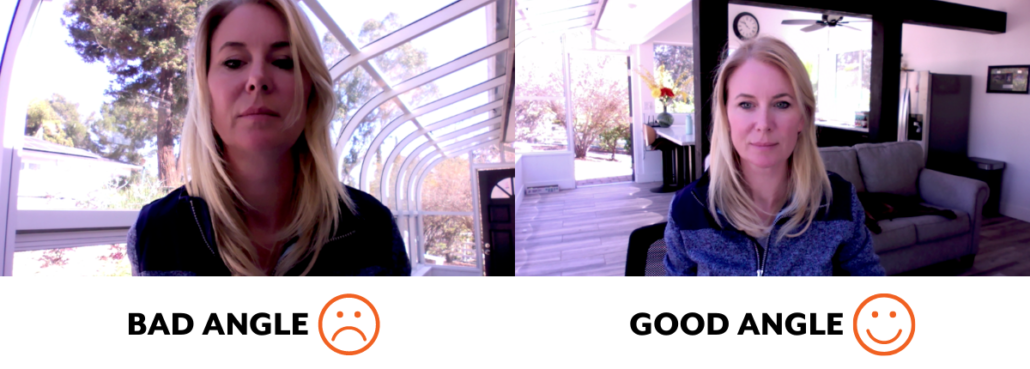
  8. BEWARE OF THE BAD CAMERA ANGLE… Here, our kick*ss Founder and Chief Creative Officer, Amanda Rogers, is here to demonstrate…

A Final Word

There you have it! All of the tools to set yourself up for success when recording a Zoom testimonial for prospective customers to view. Interested in learning more? Read on to hear about the variety of different video types available for your business to record.

Storytelling

It would feel morally wrong to write an article about storytelling and not tell you how our company came to be… Digital Storyteller starts with our Founder and Chief Creative Officer, Amanda Rogers.

In 1997, when the actors union was on strike, Amanda taught herself how to code from a book. (Yes, these were the days before WordPress, Squarespace, and WIX—scary times…)

Anyway, Amanda’s martial arts teacher was an 8th degree blackbelt teaching amazing Tang Soo Do in New York City—and had only five students. Amanda knew he needed a website—so she taught herself to write HTML, CSS, and Javascript to try to help him build a studio.

A year later when Amanda moved to Los Angeles, the studio was thriving. In fact, 80% of the students came to him through the website. She was hooked.

After a few twists and turns, Digital Storyteller was born—an organic digital marketing agency in Encinitas, California.

Today, the team has grown from one to nearly 15. On our team, we’ve got content specialists, social media experts, a client success manager, SEO team, as well as a website and graphic design team to continue what Amanda started.

That’s our story.
If you haven’t already recognized the importance of storytelling within a business, we’ll continue on for you. Better yet, we snagged the CEO and Owner of Digital Storyteller to chat about storytelling on camera, Andrew Marr.

What is Storytelling? 

At its core, storytelling is (you guessed it!) about telling stories. Yoast tells us that storytelling is “about using stories to engage your audience, or to make something more clear.”

As humans, we’re wired for story. From each of our early days, it’s likely we recall our parents and the people around us sharing and telling stories. We love to read books and see movies and musicals—why? Because people are addicted to stories.

But what does storytelling look like when it comes to marketing for your business? When it comes to marketing for financial services companies, we see storytelling as making what you do and the services you provide:

  • Relatable 
  • Easy to understand by your audience

Why is Storytelling Important in Marketing?

Storytelling builds trust. Here are some of the stories you can share in your marketing strategy as well as how you can share them:

  • Share your stories on your website
  • Share your origin story
  • Share how you’ve grown
  • Share the challenges your business has faced (How did you overcome these challenges? Did any positives come out?)
  • Share how you help your clients (A lot of companies don’t share how they help their clients. Come on, boast a little!)

As the old adage goes, sharing is caring… Communicating your story with your audience.

A Word of Advice from Our CEO and Owner

So, how important is it to share your company story with your digital followers? (i.e. prospects, people in similar industries, current clients, etc.)

According to Andrew, it’s extremely important if you want to build trust and if you want to build a following. We believe in the power of storytelling. In fact, we start all of our partnerships with a Brand Storytelling Session.

Picture this: You go onto a website. For ease, let’s say it’s a digital marketing agency. You’re looking at their services, considering partnering with this company but you don’t find anything about their story.

There’s nothing about their employees or how the company came to be. Does that make you want to partner with that company even more? No, of course it doesn’t. That’s not the way things go.

For those who feel like it’s weird to talk about yourself or what you bring to the table as a business, for fear of coming off as arrogant or boastful, think about it… It’s your website. That’s kind of the point! 

Let go of the taboo you were taught in grade school, that it’s bad to talk about yourself.

In business, it’s important that you share your success stories and tell people how you help them.

Lastly, share your company culture. People want to know what it’s like to work with you. People wanna know if your employees are happy. Are they going to do a great job for them if they decide to partner with you? Share stories, story after story.

Interested in learning how to build more trust with your prospects and clients? Check out this article on how pricing transparency builds trust.

black and white question marks

(No, it’s not “Digital Storytellers…”)

So, what’s the story behind our digital marketing agency’s name? “Digital Storyteller” wasn’t the first name that our Founder, Amanda Rogers, came up with. The first name was, well… An interesting choice, to say the least.

But there’s a great story behind it!

Hear it from Amanda Rogers, Owner and Chief Creative Officer, and Andrew Marr, Owner and CEO in the video below.

The Original Name: “Design and Harmony”

Back in 2020, our company was small but mighty. It also was NOT called Digital Storyteller, yet!

It was, instead, called “Design and Harmony.” Here’s why according to Amanda:

“My mother was on Broadway when I was 10… I spent every night backstage on Broadway listening to Mandy Patinkin and Bernadette Peters do Sunday in the Park with George.”

Amanda thinks back to the musical… “The play opens with the orchestra swells, and Mandy Patinkin is standing in the middle of a blank stage, and he says…”

“‘White, a blank page, or canvas, the challenge to bring order to the whole through design, composition, form, balance, light, and harmony.’”

And so, Amanda named our company “Design and Harmony.”

Why? Well, a website is like a blank page or canvas, says Amanda. “The challenge is to bring order to the whole through design, composition, form, balance, light, and harmony.”

The Switch to Digital Storyteller

Although a beautiful story, no one has time to tell it every time we tell them our company name. Thus, Andrew came up with the name “Digital Storyteller.”

Why? It is, at its simplest form, what we do: Tell stories in a digital format.

Interested in learning more about the team? Check out this article to see what a day in the life of an organic marketing team looks like.

Person using twitter on their phone after being bought by Elon Musk

If you’re like us, you’re trying to stay updated on what the heck is going on with Twitter. The nearly 20-year-old app has experienced some changes recently, and we’re here to explain what’s going on. 

Elon Musk Bought Twitter

Earlier this year, electric vehicle tycoon Elon Musk expressed interest in Twitter because he sought to continue the company’s commitment to free speech. In April, Musk bought over 9% of Twitter, making him the largest shareholder. 

After negotiations, Musk and Twitter finally agreed to a deal. According to the New York Times, “Twitter agreed to be taken over at $54.20 a share, a 38 percent premium over the share price before it was revealed that Mr. Musk had been buying up the company’s stock.”

In simple terms, he bought Twitter for about $44 billion. This is the largest deal in history to take a company private. 

Critics, however, question the deal since the platform has around 217 million daily users compared to the billions of users logging into Instagram and Facebook daily. Additionally, the little blue bird app hasn’t turned a profit in nearly a decade. 

Tesla’s CEO counters financial criticism because he is placing a higher value on opening the platform to free speech. In a release announcing the agreement between Twitter and Elon Musk, the new owner explains “free speech is the bedrock of a functioning democracy, and Twitter is the digital town square where matters vital to the future of humanity are debated,” said Musk. 

The billionaire tech mogul added, “I also want to make Twitter better than ever by enhancing the product with new features, making the algorithms open source to increase trust, defeating the spam bots, and authenticating all humans. Twitter has tremendous potential – I look forward to working with the company and the community of users to unlock it.”

C-suite level Executives Quit Twitter 

A company reshuffle is to be expected during any merger or acquisition. Twitter is no exception. This company, however, is experiencing a larger than usual reshuffle as three C-suite-level executives and two vice presidents depart from the company. 

Amid this new chapter for the company, their CEO, Parag Agrawal, has assured the staff at Twitter that they are not planning company-wide layoffs. 

Only time will tell how Twitter will fare after the dust settles. 

How is Twitter Reacting to the New Owner?

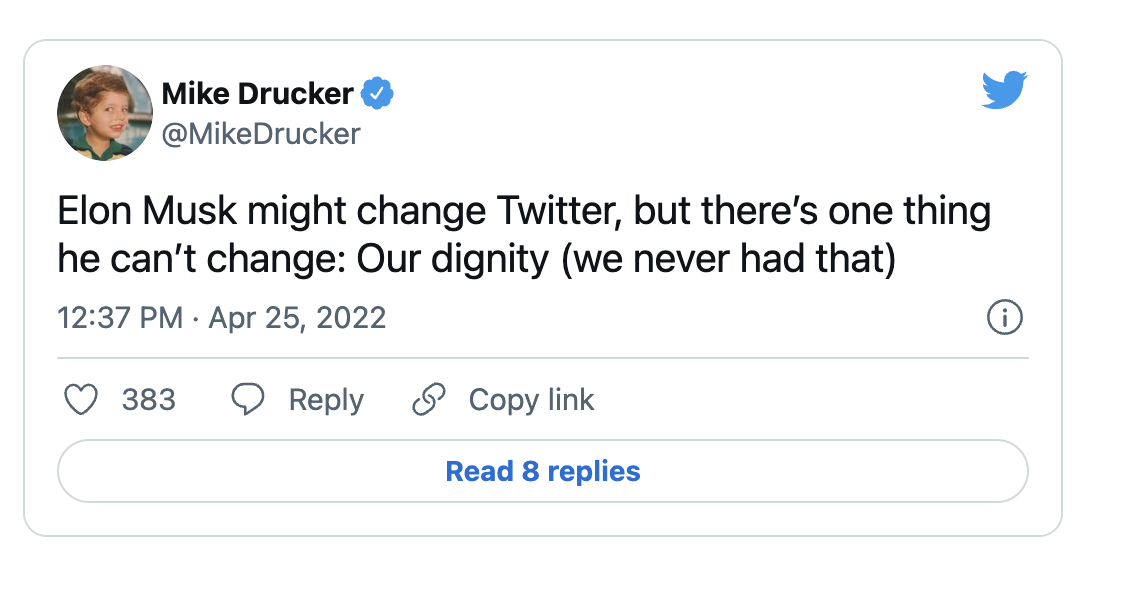
Of course, Twitter users have plenty to say about how they feel about Elon Musk purchasing the app. There are mixed feelings about it, but we thought we’d share a few of our favorite reactions below. 

The Twitter saga is long from over, and we’re excited to keep you up to date on any new news that surfaces. Save this link to stay updated on what’s going on with Twitter. Speaking of social media apps, read our next article explaining what’s going on with the Instagram Algorithm!

new years resolutions cookies and written notes

Happy New Year! Wowza, the holidays are over and it’s officially time for a fresh start. You already know, this means it’s time for some 2022 New Year Resolutions! Hopefully, we haven’t broken them by the time this gets posted… (As long as they weren’t resolutions like no cursing or drinking, we should be on track!)Check out the video below to hear some of our team’s 2022 New Year’s Resolutions! Or, if you’re boring you can read along. Let’s get into it!

Caroline LoPresti, Social Media Manager: “My new year’s resolution is to worry less about the future and focus more on the present.”

Kelsey Arvidson, Content Specialist: “I wanna cook more recipes in the new year every week or maybe every month ’cause that’s more realistic.”

Magdi Cook, Graphic & Web Design Manager: “My new year’s resolution is to get involved in dance classes again and to start a gratitude journal where I journal 10 items that I’m grateful for every night.”

Devin Aubert, SEO Manager: “My 2022 new year’s resolution is to be the coolest, funnest aunt to my soon-to-be-born baby niece or nephew.”

Jackie Berens, Client Success Manager: “My new year’s resolution is to make my life my medicine.”

Madi Lindley, Social Media Specialist: “I want to travel more this year and see new places.”

Beatriz Carias, Content Specialist: “I wanna get more involved in my community and volunteer more.”

Becca Jones, Content Specialist: “My new year’s resolution is to make time for reading before bed.”

Amanda Rogers, Founder & CCO: “I can’t make new year’s resolutions. I’m too old and tired.”


We know, you really enjoyed this. We did, too! You know what else you will enjoy? Our Owner & CEO’s Chardonnay Review Series.

His name is Andrew Marr but we like to call him the ranting Scot (yes, he’s from Scotland). Anyway, there are 35 reviews, so get ready to binge-watch!

Or, if you’re already missing the holiday season, get a load of our team’s favorite family traditions on the blog.

Holiday Traditions

It’s the holiday season—hooray! At Digital Storyteller, we love our team (and no, it’s not just because our bosses got us boujee gifts like custom tumblers and embroidered Lululemon hoodies…)

With Christmas right around the corner, we’re sharing the opportunity to get to know the parts that make our team who we are. I mean, our team is awesome! We hire for people, which yes, we know, is a little unconventional these days… But hey! It’s working for us. We pride ourselves on having amazing company culture. Want to take a peak?

Keep reading to hear some of our team’s favorite holiday traditions, Christmas songs that make them cringe, and for FUN holiday photos!

The Founders

Q: What is your favorite family tradition?

A: “My mom took me to see the Nutcracker every year at Christmas at Lincoln Center in NYC (where I’m from) we’d dress up and go out in the cold and take the subway up to the theatre. We did that every year for 30 years.  Now, I take Ella, my daughter every year.  The best part is the time together and being unnecessarily judg-y about the dancers! I also love to go get the Christmas tree and decorate while listening to Christmas music and having eggnog with bourbon.” 

-Amanda Rogers, Founder Chief Creative Officer

Q: What do you like most about Christmas?

A: “What I like the most about Christmas is opening gifts on Christmas morning.  I haven’t learned how to ask for something in a way that doesn’t end up with 5 of them.  But I kind of like that. Amanda bought me 5 cashmere sweaters last year. I had mentioned that I’d like a cashmere sweater… We live in San Diego.  Just saying.”

-Andrew Marr, Owner, CEO

The Content Team

Q: What is your favorite family tradition?

A: “My family spends every Christmas Eve cooking up a huge meal! We make tamales, turkey, ham, pepian, and many other yummy traditional Guatemalan dishes.”

“After cooking, we feast on all of the dishes we worked so hard to make together while catching up with family we haven’t seen in a while. We chat, reminisce over old memories, and play games until the clock strikes midnight. Once midnight hits, all of the kids (yes that still includes me) zoom to the Christmas tree to open presents. We’re all usually up until 2 am playing with our new gifts or still chatting together.

“It’s one of my favorite family traditions because it’s rooted in spending quality time together and making more cherished memories.” —Beatriz Carias, Content Specialist

Q: What is a funny family tradition of yours?

A: “My family always wears these glasses when they pick me up at the airport!” —Kelsey Arvidson, Content Specialist

Q: What is your favorite family tradition?

A: “My favorite holiday tradition is on Christmas Eve all the young cousins sit together in the master bedroom and read Chitty Chitty Bang Bang (which over the years has been not so subtly turned into a drinking game for adults participating…) We read the story as we listen for Santa’s bells. When we hear the sleigh bells ring, all the kids race down the stairs and run down the driveway to try to catch Santa and the reindeer and find what presents he left them on the front porch. It’s a tradition that I’ve done my entire life and have loved to share with my little cousins since.” —Devin Aubert, SEO Manager

Q: What is your favorite family tradition?

A: “My favorite family tradition is something my family calls ‘family baking day!’ Every year in December, my family heads over to my Grandma’s house early in the morning to bake over 1,000 cookies! We bake every kind of cookie you can think of. My favorites are the ‘Turtles’—pretzels, topped with a Rolo and a pecan. Then, we package up the cookies for teachers, family, and friends. It takes all day!” —Becca Jones, Content Specialist

Q: What is your favorite family tradition?

A: “My favorite family tradition during the holidays is Christmas morning. Ever since I was a young girl, we would wake up at 5 am and wait in one of the siblings rooms for our parents to call us down. We would run out of the room, my parents with a video recorder in hand, with grins from ear to ear. After we finish opening up our gifts, my mom starts making breakfast and the smell of bacon flows throughout the house.” —Jackie Berens, Client Success Manager

The Design Team

Q: What is your favorite family tradition?

A: “My favorite holiday tradition is decorating my home and Christmas tree with my family! Every year, we light the fire pit, blast Christmas music, hang garland and streamers around the windows and staircase, put ornaments on the tree, and drink hot cocoa. And of course, the tradition wouldn’t be the same without our dogs going insane and trying to eat all of the decorations in the process!” —Magdi Cook, Graphic and Web Design Manager

Q: What kind of holiday shopper are you: Black Friday? Christmas Eve? Yearlong hoarder?

A: “I’m a year-long shopper because most of my gifts end up being handmade, and that takes time. So, if it’s a cross-stitch, painted ornament, or re-covered book, it’s a year-long process to get it planned and looking good!” —Shay Larby, Junior Graphic Designer

The Social Team

Q: What kind of holiday shopper are you: Black Friday? Christmas Eve? Yearlong hoarder?

A: “Holiday shopping is my one excuse to shop because it’s all on sale, but that doesn’t stop me from shopping all year round of course… ;)” —Caroline LoPresti, Social Media Manager

Q: What is your favorite family tradition? And what Christmas song makes you cringe?

A: My favorite family tradition is taking snowy walks in the city to get hot chocolate when I go home to Boston. The Christmas song that makes me cringe is… nope, can’t think of a single one they are all amazing…especially the Michael Bublé Christmas album (obvi)!” —Chris Preller, Social Media Coordinator

Q: What is your favorite family tradition? 

A: “My favorite family tradition is our white elephant gift exchange that we have on Christmas Eve. Everyone contributes very random gifts, some good and some bad. My favorite gifts that I’ve ended up with were the Snoop Dogg cookbook and a blanket hoodie!” —Madi Lindley, Social Media Specialist

Are you in desperate need of some last-minute gift ideas? Check out this article where we detail holiday gifting strategies for B2B businesses!

Andrew Marr

Who can resist a good story? Character development and relationships, drama, adventure, and suspense all contribute to a reader’s desire to have a vested interest in a story. In fact, it’s a scientific reality that stories light up the human brain in a unique way that draws us in and mirrors the neurological activity of the storyteller. We are not just sociologically wired for story, it’s neurological as well.

Marketing is a complex and ever-changing industry. Trying to keep up with the times is a challenge that may not be within the capabilities of your business. So you may decide to outsource your marketing. But even then, there are multiple options available to you.

Emotional Intelligence

The dynamics of a startup culture are unique and pose various challenges that larger businesses are less likely to experience on such a significant level. Being a new business barely past its first anniversary of operation, our goal at Digital Storyteller is to combat these challenges and come out even stronger. And if we do say so ourselves, we’re doing a d*mn good job at it.

a bottle with a heart cutout

With Valentine’s Day around the corner, we’re sharing the opportunity to get to know the parts that make our team who we are. We’re honoring the Valentine spirit by sharing some insight into what our team loves. Keep reading to learn more about what warms our hearts!

Christmas gift wine

Holiday gifting can be overwhelming. Check out our B2B gifting suggestions to make your life easier this holiday season!

goals

3 best small business marketing ideas so that you can fall in the small portion of startup businesses that don’t fail. Originally posted by Express Text

Team meeting

As our world transforms rapidly around us, the quote “culture trumps strategy” has become more relevant and more powerful than ever. The importance of building a strong strategy is impossible to deny — organizations must establish their goals and create plans of action to achieve them. However, the importance of culture exists as the manifestation of what those people are actually doing. While the gap between those two things can be wide, success in today’s market depends nearly equally on both.

In a time of rapid change and shortening reaction windows, solving the culture problem becomes even more essential to big corporations and their smaller counterparts. In order to excel, you must create a corporate strategy that responds to immediate disruptions without overlooking the importance of planning for future growth. And while innovation and digital transformation enable this dual strategy objective of seizing the upside of disruption, culture must deliver.

1. Inspire urgency for flexible growth.

Success frequently complicates and hinders the objective of culture change. Years of success can hold many organizations back from moving forward when the need to innovate arises. Companies like these rely too heavily on what’s worked in the past and often miss opportunities for positive change.

Whether you’re an established company with a history of success or a newcomer to the market, urgency is more important than ever in today’s rapidly changing economy. Inspire your employees to act urgently and reward them for their commitment to team growth.

2. Learn from every failure.

If your organizational perspective on failure is that of fear, then it’s time for a culture change that will improve the lives of your employees, clients, and leadership — look at failures as the natural outcome of experimentation that fosters agile product development, facilitates diverse thinking and encourages new idea generation.

While “celebrating failure” is by no means a new concept in business, giving your employees permission to experiment, fail, and make adjustments in their job can be challenging for both you and them. The best way to make your employees more comfortable in this department? Strong communication. 

Communicate consistently throughout the organization in a way that recognizes that failure is an inevitable part of risk-taking. Communications should not only celebrate successes but also discuss why an idea or effort didn’t work and explore the lessons learned from them.

3. Use outside sources to inspire a new mindset.

There are some things your company cannot do on its own — and overhauling your company culture is one of them. If you truly want to prime your organization for innovation, it’s important to outsource inspiration and provide a range of perspectives.

Leaders and teams must get out of their comfort zones and interact with outside innovators to recognize their company’s culture gaps and identify the new attributes that need to be cultivated inside the organization.   

As the CEO of your company, you have likely led a number of initiatives for change at your company. However, when it comes to changing your corporate culture, nothing is more important than action. Looking for new ways to communicate your culture? Reach out to Digital Storyteller today!

RESOURCES

Blog
Privacy Policy

© Digital Storyteller 2026

Get The Secret Sauce

Delivered right to your inbox (napkins optional)


© Digital Storyteller 2026