Content Optimization

Investing time and resources into content development is in a sense useless if not properly optimized. Content and SEO go together like wine and charcuterie boards. One without the other simply doesn’t make sense.

Marketing Strategy

So we’re a month into the new year. Odds are the resolutions you vowed to pursue are a thing of the past. The new year is a perfect opportunity to reevaluate your business’s marketing strategy, and it’s not too late to make it happen!

Take a nap

What we learned from Neil Patel’s “The Future of SEO” Summit

marketing without brand voice

marketing without a brand voice can seriously hurt your business!

organic marketing
Roll of money with a Paid label

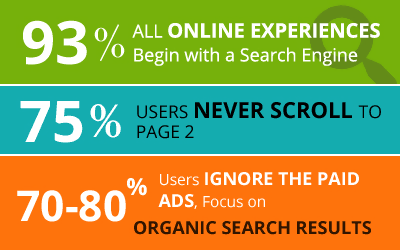
At Digital Storyteller, we like to think of paid advertising as adding fuel to the fire, giving things a little kick. Paid advertising shouldn’t be the whole cake, just an ingredient you add toward the end for some flavor.

Organic search

3 best small business marketing ideas so that you can fall in the small portion of startup businesses that don’t fail. Originally posted by Express Text

business

As our world becomes more and more fragmented, the economic slowdown is having an unprecedented impact in nearly every country around the world. At the same time, many brands and employers are attempting to put their purpose at the center of everything they do — those with a clear purpose are prospering, while many corporate “dinosaurs” that refuse (or are unable) to adapt are dying off as the rate of change increases.

Organizations of the future need to embrace fully the concepts of empowerment, learning, and balancing technology with the individual if they are to succeed, by using the power of technology and automation to rehumanize — rather than dehumanize — the workplace.

These major changes are being driven by a few important factors in consumer behavior:

Generational gaps are closing in the workplace.

More generations are working together than ever before, with different expectations and attitudes. By 2025, experts expect millennials to make up nearly 75% of the active workforce. Outside of the workplace, life expectancy is continuing to rise and up to two-thirds of babies born in the last year could live to be 100. In the older generations, people are retiring later or not at all. All of these changes mean we now have an environment in which older workers already report facing prejudice at work and millennial executives struggle to gain acceptance from older colleagues.

Flexibility and job changes are more encouraged than ever before.

By 2020, almost 20% of US workers — or 31 million people — will be “contingent” rather than permanent. If that sounds like bad news, consider that 80% of today’s contingent workers appreciate the flexibility. Most of Uber’s growth has come from drivers who use their own cars, and 75% of them have other jobs. (What happens when a job for life becomes a job for a day?)

The model for success isn’t cut and dry anymore.

New, innovative business models are springing up all over the world, many of them rooted digitally in the “sharing economy.” Nearly half of American business leaders think that their current business models will cease to exist within the next five years.

Robots are taking over (sort of).

Artificially-intelligent supplementation devices could replace 33% of jobs by 2025, and Mark Carney, the Governor of the Bank of England stated earlier this year that almost 15m UK jobs could be “hollowed out” with the workforce being replaced by robots: “Alongside its great benefits, every technological revolution mercilessly destroys jobs and livelihoods … well before the new ones emerge.”

While these trends will affect everyone, it is especially pertinent to keep up with these changes as the leader of an organization — this could be the wake-up call you’ve been waiting for.

To thrive in the new era, we must rethink the role that organizations and their workforce play in driving competitive advantage.

Thriving will mean adapting to the changes, facilitating the interconnections between humans, and investing in their uniquely human attributes. If you are struggling to take your company into the digital space, reach out to Digital Storyteller today!


social media

As marketers, we often spend a huge amount of time creating content that is designed specifically for your customers, prospects, and leads. We are writing, analyzing, optimizing, and innovating every day. Sometimes, we’ll spend hours writing a single caption. 

In fact, we usually spend so much time planning and executing the email strategy, we hardly ever connect with other marketers on our teams who manage our blogs and other content, including social and chat, website, video strategy, events, PR, and more. And this isn’t unusual.

Traditionally, marketers focus on the details — they sweat the small stuff and divide to conquer. One marketer may be in charge of improving conversion metrics, while another focuses on SEO and someone else optimizes product pages. You might even have an intern creating some Instagram stories.

But when marketers complete these tasks in isolation, prospects and customers are left with a disconnected experience.

If you want your business to succeed, you need to take a step back and see the bigger picture. How do all your marketing activities connect? What do your customers really experience? And how can you keep your team working towards the same goal? Let’s find out.

The conversion process is longer than you expect.

We like to believe that every customer takes a predictable, linear path from awareness to consideration to purchase. This process starts with an ad, a blog post, a call-to-action, an email newsletter, and then transitions smoothly into a purchase. Done and done.

Of course, some prospects will take this direct route through your marketing funnel, but most take several detours along the way.

By trying to force the customer journey into a linear, step-by-step mold, you risk losing prospects that don’t fit your design. Consumers want information before they buy, and there isn’t a one-size-fits-all method for getting it.

The truth is, the customer journey is messy and can be difficult to predict — everyone’s is a little different. Some customers may look for information about your brand through search, while others may click on an ad, an email, or seek out reviews from friends.

And the journey doesn’t stop there. Marketers shouldn’t stop interacting with customers as soon as they click “buy” — if you want to maintain and nurture unique relationships, you need to continue to interact with customers after you make a sale. That’s why it’s important to build strong bridges between your marketing efforts to build one cohesive brand experience.

Build strong bridges using your HubSpot CRM.

As a marketer, you’re probably used to using multiple tools and point solutions to connect with prospects and customers. Not only is this method inconvenient, but if all your marketing efforts aren’t connected by a customer management solution or CRM, it also creates a disjointed experience for customers. Marketers need to take a step back and see the bigger picture. If you want to build a complete customer experience, focus on connecting your marketing software with the tool that should be at the core of your marketing efforts: your company’s trusty CRM.

CRMs are traditionally considered a tool for sales teams to track leads, prospects, and customers. With them, reps can see every interaction a contact has had with a brand. Everything from calls with a sales rep to website visits is tracked and logged in a contact record.

While you may be familiar with a CRM, you probably aren’t using it to its full potential. Masters of email marketing, live chat, ads, and social media tools they may be, marketers rarely use a CRM for anything other than creating email lists, if at all. Think about it. You probably stress over the last-minute details of a campaign and track its success, but I’m guessing you rarely check to see how your campaigns are influencing individual contacts, or who’s consistently engaging with your marketing efforts.

By putting it at the center of your marketing strategy, you can truly personalize your messaging. You can use any data point or marketing engagement metric to segment contacts beyond lifecycle stages. This allows you to create more targeted, meaningful content and ads and expedite the sales process, helping your entire company grow better. Without a CRM, your personalization efforts are smoke and mirrors at best, and insufficient at worst.

If you’re curious about utilizing the HubSpot platform or setting up your own digital marketing strategy, contact us at Digital Storyteller today!

RESOURCES

Blog
Privacy Policy

© Digital Storyteller 2026

Get The Secret Sauce

Delivered right to your inbox (napkins optional)


© Digital Storyteller 2026